
六个亚洲国家的城市人口Urban population in six Asian countries
AI 估评 8 分待复核查看四维评分详情
四个维度等权计分,均值 8,按半分档展示。AI 估评供学习参考。
任务完成度 TA8 / 9
概述六国均增长、印尼与斯里兰卡首尾不变,选择印尼、越南等关键变化并作跨国比较;取整均合理。Viet Nam was not far behind所指略不明。
档位依据:主特征清晰充分达到8档;局部指向含混与非全部数值报告不影响主旨,但不支持9档近乎无疏漏。
查看评分证据
the urban share grew everywhere
六国2023年比例均高于2000年。
Its urban share rose from 24% to 38%, taking it almost level with Pakistan (39%) and past India (35%).
越南与巴基斯坦、印度的2023年比较正确。
- 题图证据
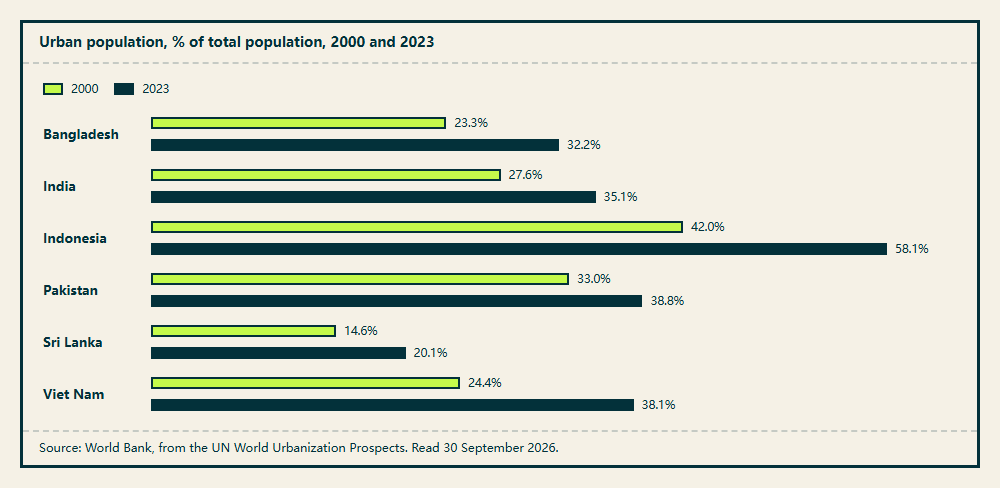
图中六国均上升,印尼42.0→58.1%居首、斯里兰卡14.6→20.1%居末;越南24.4→38.1%。
改进建议
- 明确说明Viet Nam所接近的是印尼的增幅还是巴基斯坦的2023年水平。
连贯与衔接 CC8 / 9
引言、总览后按2000与2023分段,后段穿插跨年增幅比较;整体顺序清楚,个别Viet Nam指代需回看。
档位依据:易于跟随且衔接管理良好达到8档;一处比较指向略含糊限制9档。
查看评分证据
In 2000 Indonesia already had 42% of its population in urban areas
第一细节段以起始年份展开。
By 2023 more than half of Indonesians lived in urban areas
第二细节段自然转向末期并进行对比。
改进建议
- 将越南增幅比较对象写明。
词汇资源 LR8 / 9
urban share、urbanised、lagged far behind和percentage points准确传递比例与排名,词汇灵活;少量比较短语指向不够精确。
档位依据:任务词汇宽而合适达到8档;偶发指向问题阻止9档。
查看评分证据
Sri Lanka lagged far behind
表达最低值与其他国家差距自然。
after an increase of 16 percentage points
百分点单位使用准确。
改进建议
- 以明确对象的比较词替代含混的not far behind。
语法范围与准确性 GRA8 / 9
主从句、分词结构、whereas对照和分数表达准确,绝大多数句子无误。
档位依据:结构广而准确达到8档;未见足以确认9档完全灵活控制的进一步证据。
查看评分证据
whereas Pakistan and Sri Lanka changed less, by around 5 to 6 points each
whereas对照及数量补充结构准确。
Even so, only one Sri Lankan in five lived in a town or city in 2023.
让步连接与分数化表达自然。
改进建议
- 保持语法准确,特别确保比较句的对象明确。
评分日期:2026-10-23 · 评分规则:IELTS 写作公开评分标准(2023 年 5 月版)
作文题目
依据来源图表文字整理的练习提示;非原站逐字题干,实际考试出处未核实
Urban population, % of total population, 2000 and 2023
Country | 2000 | 2023
Bangladesh | 23.3% | 32.2%
India | 27.6% | 35.1%
Indonesia | 42.0% | 58.1%
Pakistan | 33.0% | 38.8%
Sri Lanka | 14.6% | 20.1%
Viet Nam | 24.4% | 38.1%
Summarise the information by selecting and reporting the main features, and make comparisons where relevant.
题目材料说明:尚未取得可核对逐字措辞的原题;当前题目据来源图表内容整理。
The bar chart shows what percentage of the population lived in towns and cities in six Asian countries in 2000 and 2023.
Overall, the urban share grew everywhere. The increases varied widely, however, and Indonesia remained the most urbanised of the six countries while Sri Lanka remained the least.
In 2000 Indonesia already had 42% of its population in urban areas, well ahead of Pakistan at 33%. India, Viet Nam and Bangladesh were grouped between 23% and 28%. Sri Lanka lagged far behind, at 15%.
By 2023 more than half of Indonesians lived in urban areas (58%), after an increase of 16 percentage points, the largest of the six. Viet Nam was not far behind. Its urban share rose from 24% to 38%, taking it almost level with Pakistan (39%) and past India (35%). Bangladesh’s figure climbed by about 9 points to 32%, whereas Pakistan and Sri Lanka changed less, by around 5 to 6 points each. Even so, only one Sri Lankan in five lived in a town or city in 2023.
- 文章身份
- 机构教研范文
- 题目来源
- 据题图整理的练习题