
地热发电流程How geothermal energy is used to produce electricity
AI 估评 8 分查看四维评分详情
四个维度等权计分,均值 7.75,按半分档展示。AI 估评供学习参考。
任务完成度 TA7 / 9
主要设备、方向、深度和蒸汽带动发电过程清楚;加入降低压力使水蒸发、成为过热水等机制,图中没有对应信息。
档位依据:清楚概述和完整主流程支持7档;额外物理机制推断限制8档对输入信息的准确忠实转述。
查看评分证据
the water absorbs geothermal heat and becomes superheated
加热有图据,superheated的特定状态无标注。
In the condenser, the pressure is lowered, causing the hot water to convert into steam.
图仅示意蒸汽产生,未显示降压机制。
- 题图证据
已查看流程:冷水储槽、4.5公里向下箭头、注入井、热岩地热区、生产井热水上泵、Condenser、Steam、蒸汽驱动涡轮及涡轮驱动发电机,最后通输电塔。
改进建议
- 删除superheated及降压解释,按图示设备和箭头说明水被加热后形成蒸汽。
连贯与衔接 CC8 / 9
概述后按水和能量流向顺序展开,This deep well、Next、This steam衔接清楚,读者易追踪流程。
档位依据:排序和指代良好达到8档;整体细节单段略密,尚非9档娴熟分段。
查看评分证据
Next, this heated water travels upward via a production well
清楚从地下加热转入上泵。
This steam then flows toward a turbine
用产物承接下一阶段。
改进建议
- 按地下加热和地面发电两段组织细节。
词汇资源 LR8 / 9
harnesses、reservoir、injection well、routed、rotating等技术和动作词自然准确,范围宽;underground heat的重复解释可简化。
档位依据:灵活专业表达符合8档;过强的superheated词义及重复解释未达9档精度。
查看评分证据
harnesses underground heat (also known as geothermal heat)
表达清楚但括号解释略重复。
The rotating turbine drives a connected generator
技术动作搭配准确。
改进建议
- 用heated water取代无依据的superheated,精简同义解释。
语法范围与准确性 GRA8 / 9
关系从句、被动、结果分词及并列结构准确,多数句无误,复杂技术过程语法清楚。
档位依据:广泛准确句式支持8档;多句连续where/causing框架仍可更灵活以接近9档。
查看评分证据
where it is routed into a condenser
关系从句和被动结构准确。
thereby producing electricity, which is then delivered to the power grid through power lines
分词结果与被动关系从句准确结合。
改进建议
- 适当合并相近的因果结构,保持主设备和动作清楚。
评分日期:2026-10-23 · 评分规则:IELTS 写作公开评分标准(2023 年 5 月版)
作文题目
来源页题目,与同页选定答案配套;未核为实际考试真题
The diagram below shows how geothermal energy is used to produce electricity.
Summarise the information by selecting and reporting the main features, and make comparisons where relevant.
Write at least 150 words.
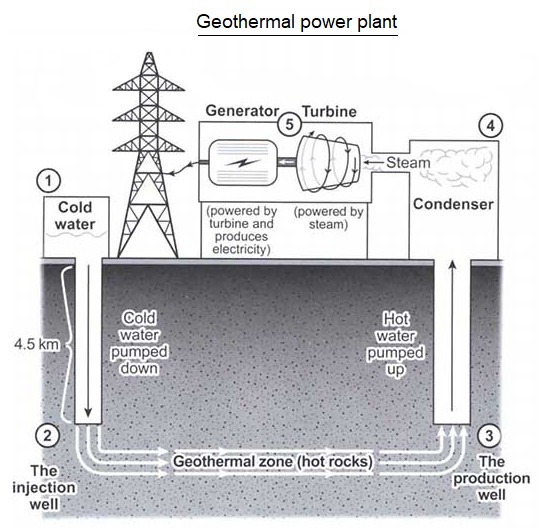
The diagram illustrates how a geothermal power plant harnesses underground heat (also known as geothermal heat) to produce electricity.
Overall, the process has five major stages: cold water injection, heating the water using geothermal heat, pumping heated water to the surface, steam generation, and finally, electricity production using a turbine.
In the first phase of this process, cold water stored in a surface reservoir is pumped down through an injection well that reaches approximately 4.5 kilometres beneath the Earth’s surface. This deep well carries the water into a geothermal zone composed of very hot rocks, where the water absorbs geothermal heat and becomes superheated. Next, this heated water travels upward via a production well to the surface, where it is routed into a condenser. In the condenser, the pressure is lowered, causing the hot water to convert into steam. This steam then flows toward a turbine, causing its blades to spin rapidly. The rotating turbine drives a connected generator, thereby producing electricity, which is then delivered to the power grid through power lines.
- 文章身份
- 机构教研范文
- 题目来源
- 教学题目