
家庭供暖能源使用Home heating use
AI 估评 8.5 分查看四维评分详情
四个维度等权计分,均值 8.5,按半分档展示。AI 估评供学习参考。
任务完成度 TA9 / 9
概述兼顾升降、首位易主与最大相对增长;细节按下降和上升分组,千户换算与热泵四倍、二十倍计算均准确,选择充分。
档位依据:主要特征及支持数据完整准确,达到9档。
查看评分证据
electricity had replaced gas as the most widely used method
准确识别末年首位改变。
this number then quadrupled to 240,000, twenty times the starting figure
中末年及首末年倍数准确。
- 题图证据
已查看表:2005/2012/2019燃气620/540/410,电180/290/470,木材95/88/80,热泵12/60/240;单位千户。
改进建议
- 保持这种绝对数量与相对变化结合的比较。
连贯与衔接 CC8 / 9
四段层次清楚,下降与上升两组对应概述,指代稳定;Turning to和As for两处显式转段稍常规,但阅读顺畅。
档位依据:逻辑和衔接良好达到8档;连接方式仍较显式,未充分呈现9档完全自然的控制。
查看评分证据
Turning to the methods that lost ground
清晰引出下降组。
The most striking change, however, was in heat pumps.
从电转向更显著的相对变化。
改进建议
- 可直接以Electric heating开段,减少对称的转段提示。
词汇资源 LR8 / 9
relied on、lost ground、edged down和proportional increase准确灵活,数量与趋势措辞成熟。
档位依据:词汇范围和精确性符合8档;少数泛化如spread quickly未达全篇最精确的9档表现。
查看评分证据
Wood heating, which was much less widespread, edged down only slightly
程度和普及范围搭配准确。
heat pumps had recorded the largest proportional increase
准确区分相对增长。
改进建议
- 把spread quickly改为became increasingly common,更贴近使用家庭数。
语法范围与准确性 GRA9 / 9
定语从句、让步转折、分词补充、完成时和倍数结构均自然准确,句式随比较关系灵活变化。
档位依据:语法及标点持续受控,达到9档。
查看评分证据
but this figure declined throughout, reaching 410,000 by 2019
分词补充结果及时间处理准确。
They were used by just 12,000 households in 2005 and by 60,000 in 2012
并列介词短语省略自然。
改进建议
- 保持现有复杂句与简短强调句的搭配。
评分日期:2026-10-23 · 评分规则:IELTS 写作公开评分标准(2023 年 5 月版)
作文题目
GoPrep Writing course 原创练习数据与题目;网站说明为教学材料,非官方IELTS试题。
The table below shows the number of households (in thousands) using four types of home heating in one region in 2005, 2012 and 2019. Summarise the information by selecting and reporting the main features, and make comparisons where relevant.
Heating type | 2005 | 2012 | 2019
Gas | 620 | 540 | 410
Electric | 180 | 290 | 470
Wood | 95 | 88 | 80
Heat pump | 12 | 60 | 240
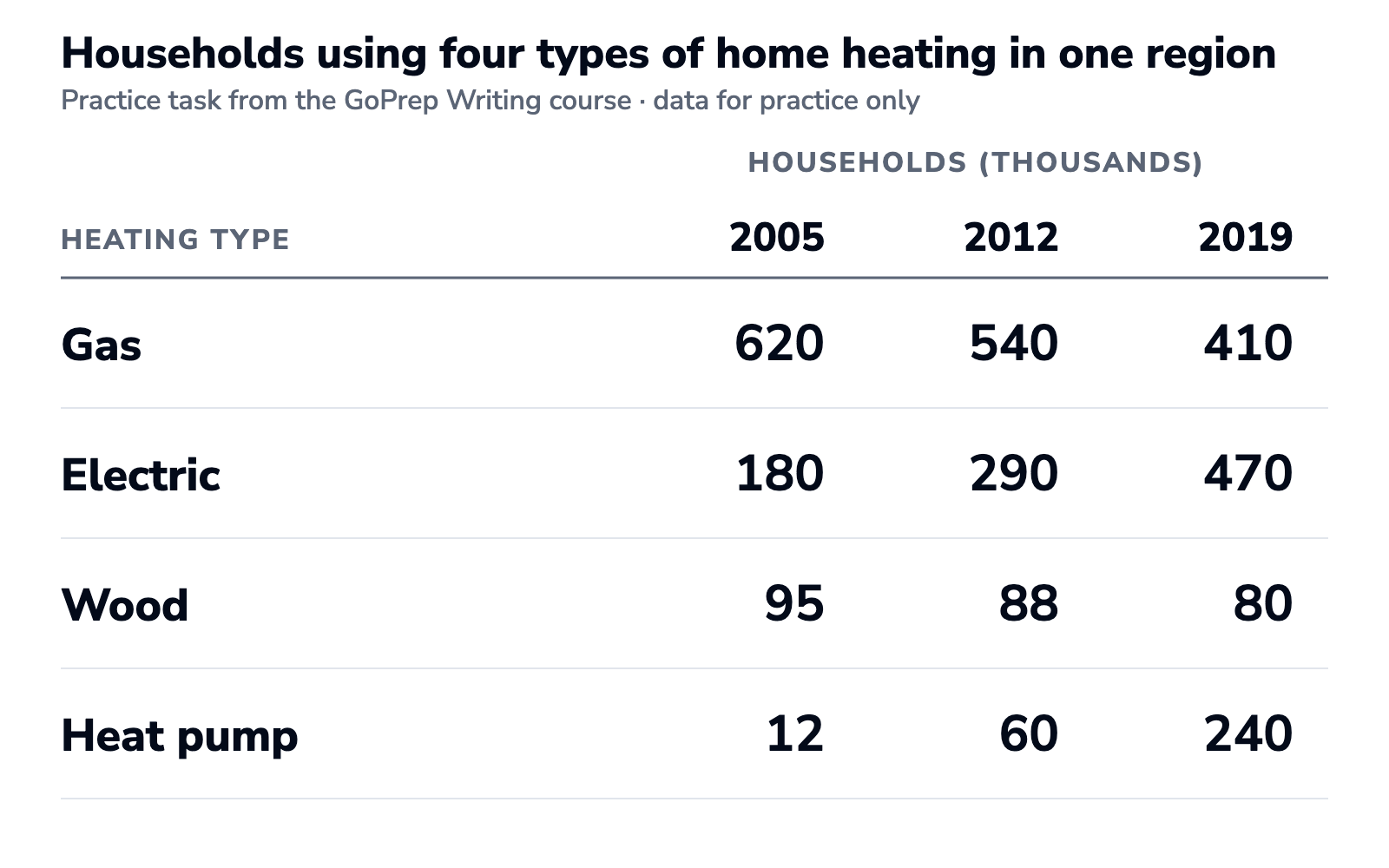
The table compares how many households in one region, in thousands, relied on four types of home heating in 2005, 2012 and 2019.
Overall, gas and wood heating became less common over the period, while electric heating and heat pumps spread quickly. By the end, electricity had replaced gas as the most widely used method, and heat pumps had recorded the largest proportional increase.
Turning to the methods that lost ground, gas was by far the most common type in 2005, used by 620,000 households, but this figure declined throughout, reaching 410,000 by 2019. Wood heating, which was much less widespread, edged down only slightly, from 95,000 to 80,000 households.
As for the methods on the rise, electric heating climbed from 180,000 households to 470,000, overtaking gas by the end of the period. The most striking change, however, was in heat pumps. They were used by just 12,000 households in 2005 and by 60,000 in 2012, but this number then quadrupled to 240,000, twenty times the starting figure.
- 文章身份
- 机构教研范文
- 题目来源
- 原创教学练习题