
家庭每周收入的支出分配How families in one country spent their weekly income
AI 估评 7.5 分查看四维评分详情
四个维度等权计分,均值 7.25,按半分档展示。AI 估评供学习参考。
任务完成度 TA7 / 9
八类方向和最大支出转换清楚;住房、交通末期缺具体数值,降低类别只概括未给支持,priorities therefore因果也不是图中直接信息。
档位依据:清楚概述和关键数字支持7档;部分变化展开不充分限制8档。
查看评分证据
Their housing expenditure also nearly doubled. Transport spending also grew substantially.
方向正确,交通增长缺末值支持。
the priorities of these people, and therefore, their spending habits, shifted
图只显示份额,不能确定是偏好导致。
- 题图证据
已查看横条图:食物35/17、住房10/19、燃料电力约6.5/4、衣鞋10/5、家用品7.5/7.5、个人品7.5/4、交通7.5/14、休闲8.5/22,单位收入百分比。
改进建议
- 补住房19%、交通14%及衣鞋5%,保留支出份额的客观表述。
连贯与衔接 CC7 / 9
按年份分段后进行对照,整体清楚;They和also反复,2018细节多为分立短句,跨类别连接可更灵活。
档位依据:明确推进符合7档;重复和局部列举感限制8档。
查看评分证据
Their housing expenditure also nearly doubled. Transport spending also grew substantially.
相邻also与短句框架重复。
Meanwhile, their spending on household goods held steady
以不变项目收束关系清楚。
改进建议
- 将增加、减少、不变三组分别组织,减少同型短句。
词汇资源 LR7 / 9
allocated、expenditure、held steady等准确,有比较范围;citizens、these people将家庭单位泛化,spending反复较多。
档位依据:表达足够灵活支持7档;主体和量词精度未稳定达8档。
查看评分证据
spending by the citizens in this country
统计单位为家庭,可直接写household spending。
held steady at around 8% of their weekly income
稳定份额表达自然。
改进建议
- 统一用families或households,并用shares避免把比例变化当金额变化。
语法范围与准确性 GRA8 / 9
被动、比较、分词和关系从句准确,时态一致,多数句子无误。
档位依据:广泛准确结构支持8档;部分短句并列较单一,未充分体现9档灵活性。
查看评分证据
which was more than double their spending five decades ago
比较关系从句结构准确。
making it the largest spending category in 2018
分词结果结构正确。
改进建议
- 合并相邻增加项目,用while对照下降项目以提高句式灵活性。
评分日期:2026-10-23 · 评分规则:IELTS 写作公开评分标准(2023 年 5 月版)
作文题目
来源页题目,与同页选定答案配套;未核为实际考试真题
The chart below gives information about how families in one country spent their weekly income in 1968 and in 2018.
Summarise the information by selecting and reporting the main features, and make comparisons where relevant.
Write at least 150 words.
1968 and 2018: average weekly spending by families
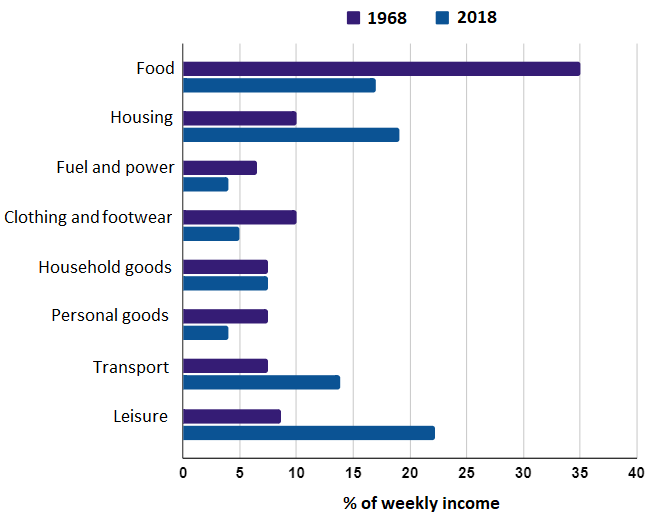
The bar chart illustrates how families in a certain country allocated their weekly income across eight categories. The chart presents a comparison between their spending in 1968 and 2018.
Overall, spending by the citizens in this country on leisure, housing, and transport rose significantly over fifty years, while expenditure on food and various personal goods declined, and spending on household goods remained relatively constant.
In 1968, the largest portion of a family’s weekly income (35%) was allocated to food. By contrast, housing and clothing each accounted for just 10%, and transport, personal goods, and household goods were around 8% each, with fuel and power taking the smallest share (approximately 6%). Their leisure spending was about 9% in 1968.
By 2018, the priorities of these people, and therefore, their spending habits, shifted. They spent roughly 22% on leisure, which was more than double their spending five decades ago, making it the largest spending category in 2018. Their housing expenditure also nearly doubled. Transport spending also grew substantially. In contrast, spending on food dropped sharply to about 17%. They spent less of their income on fuel and power, clothing and footwear, and personal goods, as all of these categories witnessed reduced spending proportions. Meanwhile, their spending on household goods held steady at around 8% of their weekly income.
- 文章身份
- 机构教研范文
- 题目来源
- 教学题目